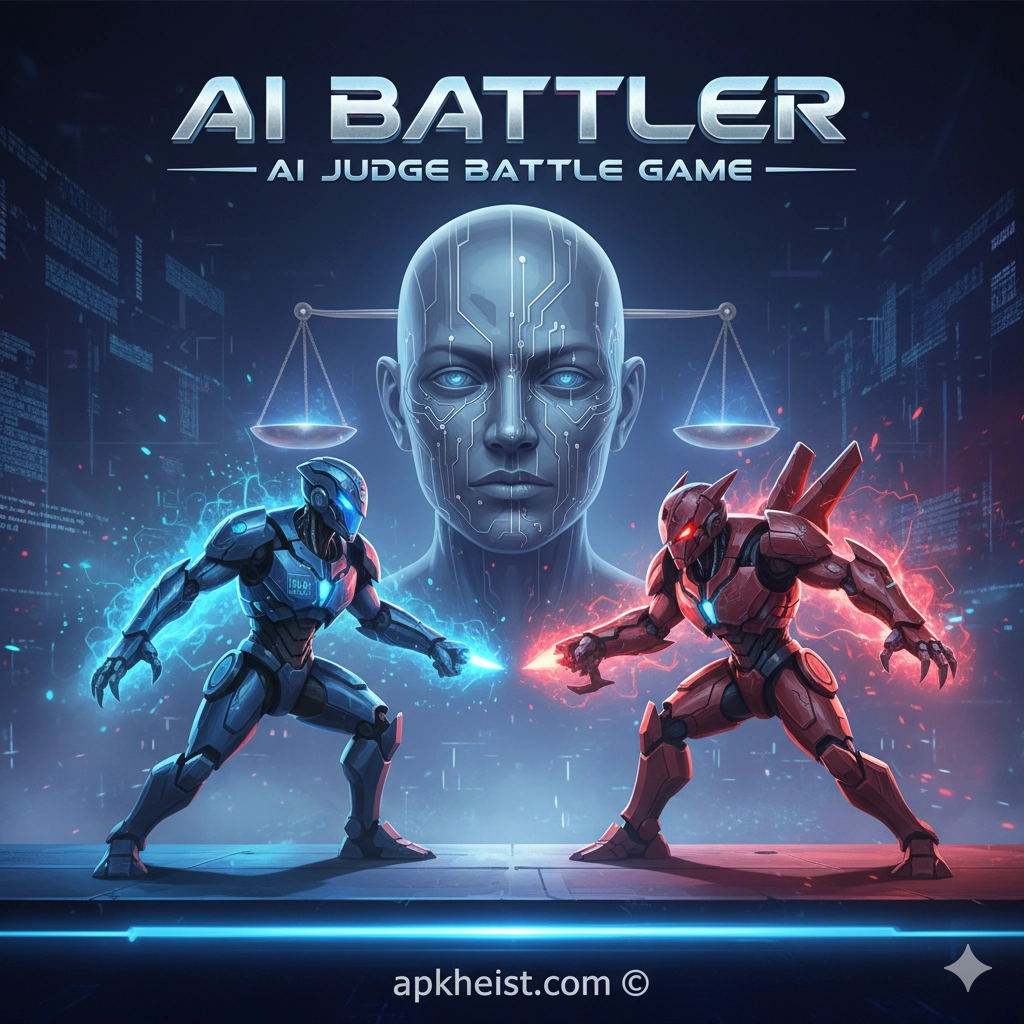
Long introduction: In recent years, AI-driven games have shifted from single-player novelty to complex competitive ecosystems. AI Battler — an AI judge battle game — combines algorithmic strategy, agent design, and a ruleset adjudicated by a machine-learning judge. Players design agents (bots) that execute tactics in rounds; the AI judge evaluates performance using a mix of objective metrics (damage dealt, resources captured, survival time) and learned judgments (creativity, adaptability, rule compliance). The result is a layered contest where technical skill, design foresight, and iterative testing matter equally. This guide covers the core mechanics, advanced strategies, design patterns for creating strong agents, common pitfalls, recommended tooling, and a curated set of internal links and resources that expand on specific topics such as productivity tools and complementary apps for workflow management.
4. Training and Iteration Workflow
6. Tools, Libraries, and Debugging
7. Community & Competitive Scene
Discover the Power of GP Chat AI
Poe App — The Practical Guide to Getting More from AI Conversations
Setmore Appointment Scheduling App
Le Chat by Mistral AI — Practical Guide
Signal Strength Test & Refresh App
Discover the Power of BLOApp App
1. Core Mechanics
The core loop of AI Battler is straightforward: (1) prepare your agent with a policy and resources, (2) submit it to the arena, (3) the match runs for a fixed number of timesteps or until victory conditions are met, and (4) the AI judge scores and ranks performances. Matches may be turn-based or real-time; the judge ingests telemetry and episode traces to compute scores. Scoring typically mixes deterministic metrics (kills, objectives completed) with learned evaluations (tactical elegance, rule adherence). Because the judge is itself an ML model, the scoring function can evolve via retraining, which introduces meta-strategic considerations: exploitability vs. robustness.
From a player's perspective, understanding the match lifecycle is essential: initialization parameters (map seed, resource distribution), observation bounds (what your agent can sense), action granularity (discrete moves vs. continuous controls), and judge feedback (per-round logs, final score breakdown). Effective players treat the judge’s feedback as the objective function to optimize; small changes to agent heuristics can yield large judged-score improvements if they align with the judge's learned preferences. Remember: optimization for perceived human-like elegance can differ from maximizing cold metrics — and the judge may reward one over the other depending on its training data.
2. Agent Design Principles
Designing a competitive agent requires decisions at three levels: architecture, policy logic, and resource management. Architecturally, choose a model class that fits the problem: rule-based FSMs for predictable environments, reinforcement learning policies for stochastic settings, or hybrid pipelines combining rules, planners, and learned modules. At the policy-logic level, encode a clear decision hierarchy: high-level goals, mid-level tactics, and low-level motor actions. Resource management covers how the agent tracks and spends in-game assets (energy, cooldowns, consumables).
Key design patterns: modular perception (separate sensors and state estimators), simulation-ahead planning (short rollouts to choose actions), fail-safe behaviors (fallback when the primary plan is invalid), and meta-adaptation (online adjustment of hyperparameters or strategy based on live judge feedback). Prioritize deterministic reproducibility in early testing: deterministic seeds and controlled matches reveal real improvements rather than stochastic noise. Use strong testing harnesses to isolate the impact of single changes.
3. AI Judge: How It Decides
The AI judge is the tournament’s referee and often the most contested black box. Judges use a combination of hand-crafted rules and learned models. Hand-crafted components enforce hard constraints (no rule-violating moves), while learned components assign scores for qualitative traits. The judge ingests raw logs and computes feature vectors such as time-to-first-objective, average proximity to objectives, collision patterns, risk-taking ratios, and emergent cooperation metrics. Those features feed into a learned model trained on curated labeled examples or historical match outcomes.
Because the judge is trainable, organizers must maintain transparency around judging criteria to reduce gaming. Common practices include publishing the judge’s base weights, offering a validation suite, or running human-review panels on a sample of judged matches. From a competitor standpoint, attempt to align your agent’s behaviors with the judge’s observable priorities during sandbox testing. Use the judge’s feedback window to iteratively tune behavior, and watch for concept drift if the judge receives periodic retraining with new data.
4. Training and Iteration Workflow
Effective workflows combine offline development with continuous integration testing. Offline: iterate on architectures and policies using simulators and fixed datasets. Online: submit agent snapshots to a sandbox arena that mimics competition conditions and returns both raw logs and judge scores. Continuous evaluation should include unit tests for rule compliance, regression tests against previous baselines, and ablation tests to measure the impact of components.
Automate your pipeline: script environment setup, containerize agent runtime, and attach telemetry reporters that produce standardized traces for judge ingestion. Track metrics in versioned experiments (score distribution, variance, win-rate). Employ a mix of search strategies — grid search for hyperparameters, population-based training for multi-agent diversity, and Bayesian optimization for expensive evaluations. Finally, document experiments and keep reproducible seedings to avoid wasting engineering cycles chasing noise.
5. Tactics and Counterplay
Tactics in AI Battler fall into offensive, defensive, and opportunistic playbooks. Offensive tactics maximize direct scoring events: early aggression, resource denial, and synchronized multi-agent strikes. Defensive tactics emphasize survival, zone control, and attrition. Opportunistic tactics exploit momentary judge blind spots or opponent errors: feints, resource baiting, or sacrificing short-term score for long-term judged elegance.
Counterplay is about predicting opponent strategy and forcing suboptimal judge-aligned choices. Use ensemble agents that switch tactics based on opponent modeling; maintain a tactic-agnostic meta-controller that picks between pre-trained specialist policies. Remember that unpredictable randomness can be a strength: agents that occasionally vary their approach can avoid being consistently outplayed by counters tuned to a single predictable pattern.
6. Tools, Libraries, and Debugging
Tooling is critical. Use simulators that support headless runs and high-throughput batch experiments. Standard libraries for RL (e.g., stable-baselines style frameworks), multi-agent toolkits, and replay buffers accelerate progress. For debugging, rely on replay visualization, telemetry heatmaps, and per-timestep state dumps. When the judge provides opaque scores, constructing feature-mapping analyses (which features correlate most strongly with judge outcomes) will expose where to focus optimization effort.
Integrate productivity and analysis tools into your workflow: conversation-and-notebook apps for design collaboration, PDF readers for documentation, and scheduling apps for team coordination. For example, leverage conversational AI assistants to summarize logs or brainstorm heuristics, and keep experiment logs in searchable formats for rapid retrieval. These auxiliary tools improve velocity and reduce cognitive load during the long cycle of training and tuning.
7. Community & Competitive Scene
The AI Battler community blends researchers, hobbyists, and competitive teams. Common venues include platform-hosted ladders, open-source leaderboards, and organized tournaments with prize pools. Community resources often share sample environments, baseline agents, and judge validation suites. Participation benefits include peer reviews, collaborative debugging, and access to collective datasets that improve judge robustness.
To succeed in the competitive scene, contribute reproducible baselines, publish postmortems of matches, and engage in judge transparency initiatives. Building reputation often leads to collaboration opportunities and invitations to higher-stakes competitions. Finally, remember that community feedback is a rapid source of insight — open-source your logs and solicit critique when possible.
FAQ 1: What is the best agent architecture for AI Battler?
Answer: There is no one-size-fits-all. For deterministic, rule-heavy arenas, hybrid architectures that combine rule-based decision trees for safety-critical decisions and learned policies for tactical nuance perform well. In stochastic or partially observable environments, model-free RL with memory (LSTM/Transformer-based policies) or model-based planners with short rollouts are effective. Start with simple, testable architectures and iterate.
FAQ 2: How does the AI judge handle ambiguous situations?
Answer: Ambiguity is typically resolved by the judge’s combination of hard-coded constraints (which reject illegal moves) and probabilistic scores. For ambiguous qualitative traits, judges trained on human-labeled examples approximate human preference, but organizers should provide tie-break rules or human review pipelines for contested outcomes.
FAQ 3: How can I prevent my agent from overfitting to the judge?
Answer: Avoid over-optimization on a single judge snapshot. Use cross-validation across multiple judge models or randomized judge ensembles, add domain randomization to environments, and maintain a hold-out test set of matches judged by a separate validation judge. Regularize reward shaping and prefer robust heuristics over brittle tricks that exploit narrow judge behavior.
FAQ 4: What telemetry should I collect for debugging?
Answer: Essential telemetry includes per-timestep agent observations, actions, scores, judge feature outputs, collision and event logs, and resource usage. Store summarized statistics (means, variances) and keep raw traces for in-depth replay analysis. Well-structured telemetry accelerates root-cause analysis.
FAQ 5: Are multi-agent teams allowed and how do they affect judging?
Answer: Many AI Battler formats permit multi-agent teams; judges then evaluate teamwork metrics such as coordinated objective captures, assist counts, and emergent role specialization. Team formats increase complexity and require additional training paradigms like centralized training with decentralized execution or population-based approaches.
FAQ 6: Which development tools help speed up iteration?
Answer: Use containerized runtimes for reproducibility, automated CI pipelines for regression tests, batch simulators for parallel evaluation, and versioned experiment trackers for metric analysis. Productivity apps (for scheduling and note-taking) and conversational assistants can speed administrative tasks so you can focus on agent development.
FAQ 7: How should new players get started?
Answer: Begin with the official tutorial environment and a simple baseline agent. Run local matches to understand scoring, then incrementally add capabilities: perception, planning, and adaptive heuristics. Join community ladders, review baseline source code, and iterate using frequent sandbox matches to learn what the judge values.