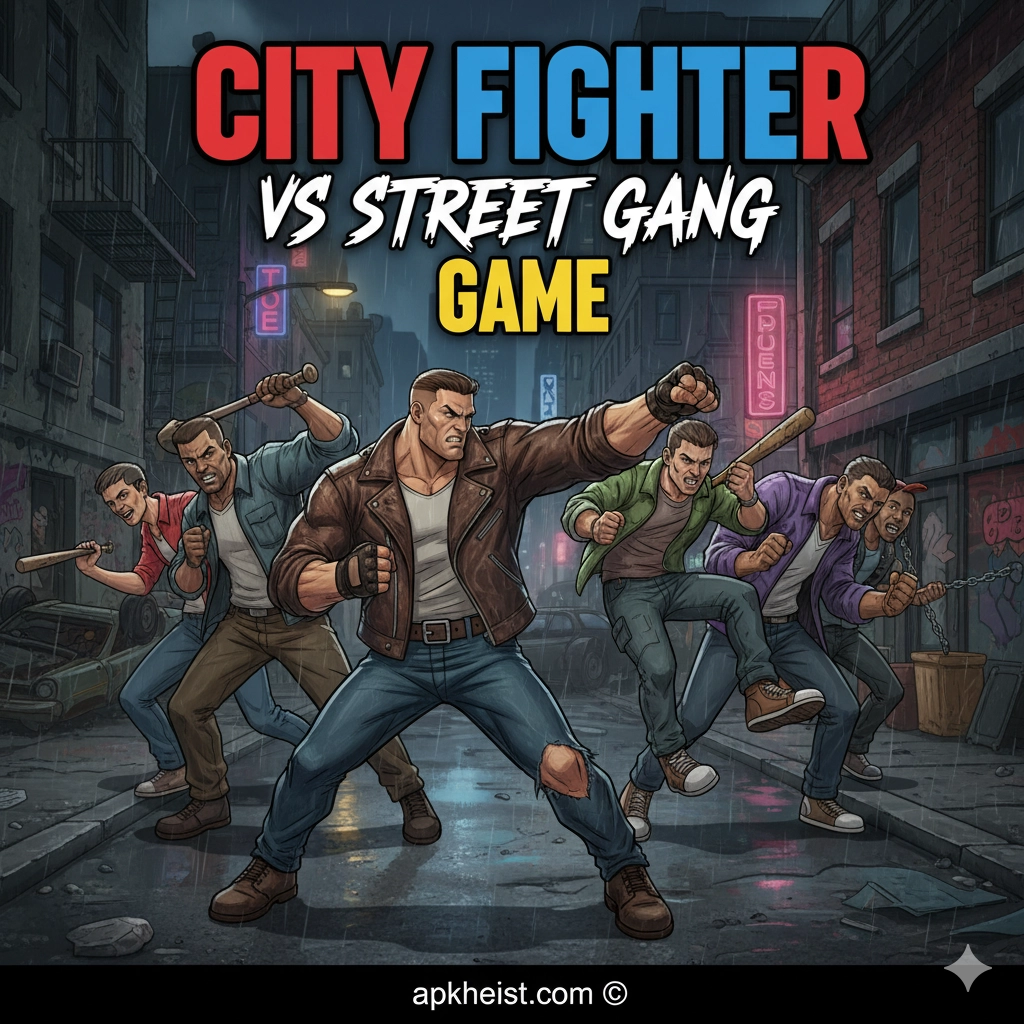
Long intro: Set across neon-bathed alleys, rooftop hideouts, and industrial docks, City Fighter vs Street Gang blends beat-'em-up mechanics with light RPG progression. Players choose a fighter archetype, take on branching street gangs with distinct behaviors and specialties, and adapt loadouts and tactics to reclaim neighborhoods. The game emphasizes responsive combat — counters, timed blocks, environment usage — while offering meta systems such as territory influence, faction reputation, and gear crafting. Whether you prefer methodical defensive play or aggressive combo strings, the experience is about controlling space, reading enemy patterns, and making meaningful upgrades to take on progressively tougher gangs.
Table of contents / quick links:
1. Overview & Setting — A snapshot of world, tone and narrative hook.
2. Core Gameplay Mechanics — How movement, attacks and interactions work.
3. Characters & Factions — Fighter classes and gang archetypes.
4. Combat System & Moves — Combos, parries, environmental attacks.
5. Maps, Environments & Missions — Key locations and mission types.
6. Progression, Rewards & Economy — Leveling, gear, and currency loops.
7. Tips, Strategies & Advanced Tactics — Practical advice for mastery.
1. Overview & Setting
The game world is an urban sprawl fractured into territories controlled by rival street gangs. Each district has a visual identity — the waterfront is foggy and industrial, the market district is cramped with vendor stalls, and the high-rise rooftops offer vertical combat opportunities. The player takes the role of a City Fighter: a skilled combatant driven to restore balance to the streets. Narrative missions alternate with open-world skirmishes, letting players choose whether to liberate areas through focused strikes or by systematically undermining gang influence.
2. Core Gameplay Mechanics
City Fighter vs Street Gang centers on tight input-response systems. Movement includes dashes, rolls, and tactical grabs. Attacks are divided into light, heavy, and special moves; combining these yields combo strings. Interaction mechanics let you use objects (trash cans, signs, scaffolding) as weapons or environmental hazards to damage groups. A stamina meter governs sustained aggression: running your stamina dry leaves you vulnerable, forcing a balance between offense and recovery. Missions present varied win conditions — eliminate gang lieutenants, defend a safehouse, or neutralize supply caches — each rewarding different playstyles.
3. Characters & Factions
Players select from several fighter archetypes: Brawler (high health, blunt force), Striker (fast combos, mobility), Technician (gadgets and traps), and Sentinel (defensive specialist). Each archetype has unique skill trees and synergy perks. Opposing them are themed street gangs: the Razor Crew (blade specialists), Night Syndicate (stealth and ambush), Freight Hounds (brute force, heavy weapons), and Ghost Riders (parkour experts). Understanding gang composition is crucial — a stealthy Ghost Riders ambush requires different counters than a Freight Hounds frontal assault.
4. Combat System & Moves
The combat system rewards timing and positioning. Core features include:
Parry & counter: A well-timed parry opens a brief window for devastating counters. Learning enemy tells is essential.
Stagger & finishers: Heavy hits and coordinated teammate attacks can stagger foes, enabling cinematic finishers that shift combat momentum.
Environmental killzones: Use higher ground, explosive barrels, or precarious ledges to turn the tide against groups.
Combos are modular: you unlock frames that chain different normals into specials. Skilled players will prioritize moves that conserve stamina while maximizing stagger buildup on tougher enemies.
Dark City: London F2P Mystery Game
5. Maps, Environments & Missions
Maps are multi-layered and designed to encourage verticality and tactical choices. Key map types include:
Market Maze: Tight corridors favor ambushes and crowd control tools.
Industrial Docks: Open spaces with cover points that reward ranged tactics and area denial.
Rooftop Network: Requires careful positioning; falling hazards exist and parkour moves are decisive.
Missions range from short brawls to extended multi-stage operations. Side activities — protecting informants, sabotaging supply lines, and reclaiming murals — provide resources and faction reputation bonuses that unlock cosmetic and functional rewards.
Zombie Waves Game: Survive the Night
6. Progression, Rewards & Economy
Progression is hybrid: player experience unlocks skill points and passive perks, while currency earned in missions buys gear, consumables, and aesthetic items. Crafting allows combining scavenged components to upgrade weapons and gadgets. Reputation with liberated districts yields discounts and special quests. A balanced economy discourages pay-to-win dynamics by ensuring that the best combat-effectiveness upgrades require skillful play and investment of time rather than purchases alone.
RealmCraft Game: A Complete Exploratio
7. Tips, Strategies & Advanced Tactics
Positioning: Use chokepoints to handle multiple attackers. Let enemy AI bunch up, then hit area moves.
Resource management: Conserve consumables for boss encounters and use environmental hazards to extend supplies.
Unit prioritization: Identify and neutralize threat multipliers first (e.g., ranged snipers, healers, or stun-appliers).
Build diversity: Maintain several loadouts — one for crowd control, another for single-target duels, and a stealth/utility set for infiltration missions.
FAQs — City Fighter vs Street Gang Game
Q1: What platforms is City Fighter vs Street Gang available on?
Answer: The title is typically released on mobile (iOS/Android) and PC; cross-save and cross-play support vary by publisher. Check the store pages for current availability and system requirements.
Q2: How long does it take to progress through the main campaign?
Answer: Campaign length depends on playstyle. A focused run can last 8–12 hours, while completionists who pursue side districts, gear crafting, and high reputation may spend 30+ hours.
Q3: Is City Fighter vs Street Gang multiplayer or single-player?
Answer: The game supports single-player campaign missions and optional cooperative skirmishes. Some modes include competitive territory control where players' gangs compete asynchronously for influence.
Q4: Are there microtransactions and do they affect balance?
Answer: Many modern urban brawlers include cosmetic microtransactions and convenience items. Responsible design limits purchases to non-essential boosts; core combat balance should remain skill-based. Always review the in-game store and community feedback for the current monetization model.
Q5: What are the best archetypes for new players?
Answer: Brawler and Sentinel are forgiving for beginners due to high survivability. Striker requires better timing but rewards faster clears. Technician suits players who prefer planning and traps over raw reflexes.
Q6: How important are environmental interactions?
Answer: Extremely important. Effective use of the environment multiplies your combat efficiency — knock enemies into hazards, use cover, and create movement opportunities to avoid crowd damage.
Q7: Any recommended early-game strategy?
Answer: Focus on mastering dodges and parries, unlock a basic area-of-effect move early, and invest in a secondary loadout for missions that require stealth or ranged options. Prioritize upgrades that reduce stamina cost and increase stagger buildup.
City Car Drifting Driving Game
Closing note: City Fighter vs Street Gang rewards players who study enemy behavior, optimize their loadouts, and use the urban environment to their advantage. Whether aiming to reclaim a single block or dominate the entire city, success comes from combining solid fundamentals with situational creativity.