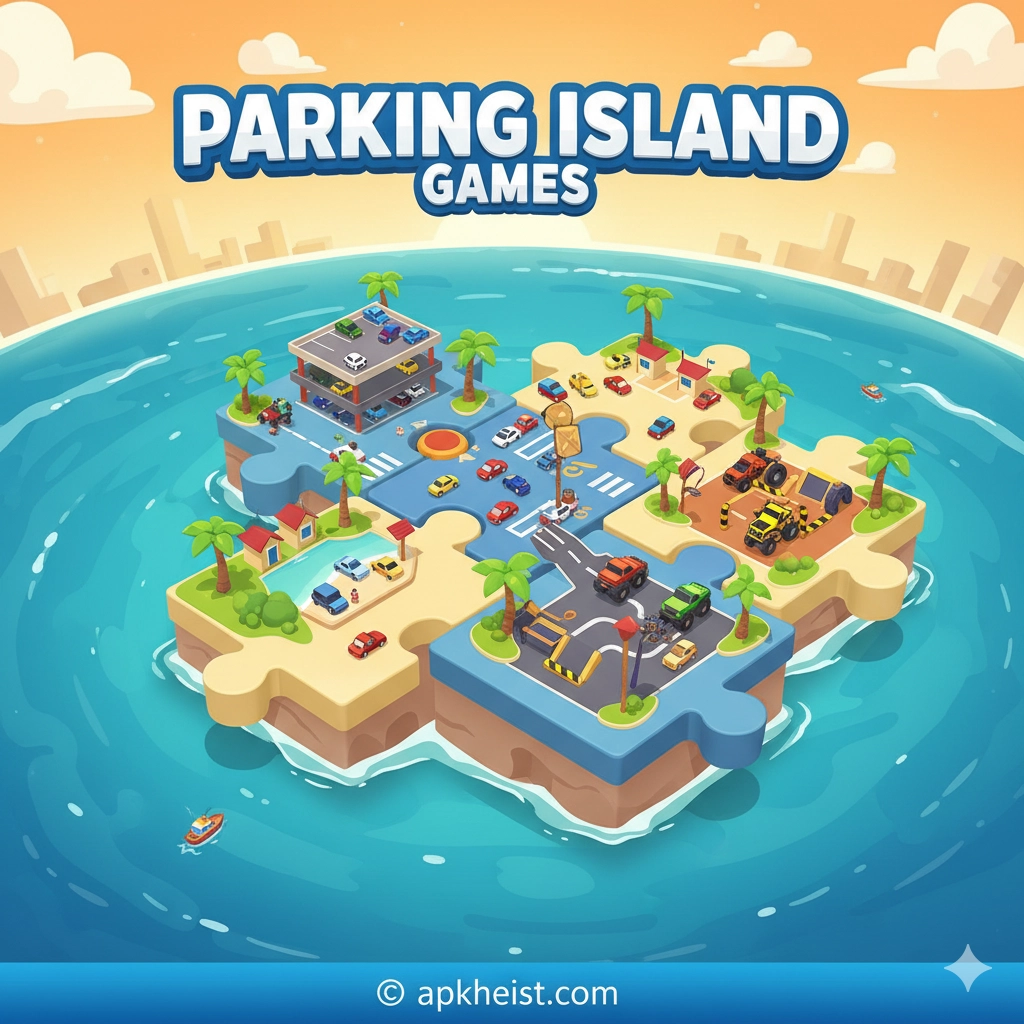
Extended Introduction: Parking Island Games have emerged as a distinctive niche within the simulation and casual gaming markets. Unlike traditional racing titles that emphasize speed and competition, these games focus on precision, spatial awareness, and calm decision-making. Set against scenic island backdrops, players navigate compact roads, docks, beaches, and urban mini-maps while mastering increasingly complex parking challenges. This blend of visual relaxation and mechanical difficulty makes Parking Island Games particularly appealing to players seeking low-pressure but rewarding gameplay experiences. As mobile gaming continues to mature, these titles demonstrate how simple concepts can evolve into deeply engaging systems when paired with thoughtful level design and progression mechanics.
Guide Overview:
1. Core Gameplay Mechanics – Understanding how Parking Island Games work.
2. Island-Themed Level Design – Why environment matters in parking simulators.
3. Difficulty Scaling and Player Progression – From beginner lots to expert docks.
4. Visual Style and User Experience – Clean interfaces and calming aesthetics.
5. Monetization and Reward Systems – How these games stay free-to-play.
6. Why Casual Players Love Parking Island Games – Psychological and behavioral factors.
7. The Future of Parking Island Games – Trends and innovations ahead.
1. Core Gameplay Mechanics
At the heart of Parking Island Games lies a deceptively simple mechanic: guide a vehicle into a designated parking space without collisions. However, the nuance comes from camera angles, limited steering sensitivity, time constraints, and obstacle placement. Players must account for turning radius, vehicle length, and reverse maneuvers, making each level feel like a small logic puzzle. These mechanics align closely with the Simulation category while remaining accessible to casual audiences.
2. Island-Themed Level Design
The island setting is more than visual decoration. Narrow bridges, coastal roads, ferry terminals, and palm-lined streets introduce environmental storytelling and gameplay variety. Water hazards replace traditional walls, increasing perceived risk without aggressive difficulty spikes. This design philosophy mirrors trends seen across Casual and Puzzle titles, where atmosphere enhances player immersion.
3. Difficulty Scaling and Player Progression
Parking Island Games typically employ gradual difficulty curves. Early stages teach fundamentals such as forward parking and simple turns. Later levels introduce tighter spaces, moving obstacles, and multi-step parking sequences. This progression structure supports long-term engagement and encourages mastery, similar to well-designed Arcade experiences that reward repetition and precision.
4. Visual Style and User Experience
Clean UI design and bright, low-contrast color palettes define most Parking Island Games. Visual clarity is essential, as players rely heavily on spatial cues. Many developers adopt minimalist dashboards, subtle sound effects, and smooth animations to reduce cognitive load. This approach aligns with broader mobile UX trends seen in tools like Camera360 App, where simplicity enhances usability.
5. Monetization and Reward Systems
Most Parking Island Games are free-to-play, supported by optional ads and cosmetic upgrades. Players may unlock new vehicles, visual skins, or island zones through gameplay or microtransactions. Importantly, monetization is often non-intrusive, preserving the relaxed pacing that defines the genre. This balance is critical to maintaining trust with casual players.
6. Why Casual Players Love Parking Island Games
The appeal lies in controlled challenge. Parking Island Games offer clear objectives, immediate feedback, and short session lengths. These traits make them ideal for stress relief and habitual play. Much like creative utility apps such as Face Over: AI Face Swap App, they provide satisfaction through incremental achievement rather than competition.
7. The Future of Parking Island Games
Looking ahead, Parking Island Games are likely to integrate adaptive difficulty, haptic feedback, and richer environmental interactions. Some developers are experimenting with hybrid modes that blend parking mechanics with light Racing or open-world exploration. As mobile hardware improves, these games may evolve into more immersive simulation experiences while retaining their casual core.
Frequently Asked Questions About Parking Island Games
What are Parking Island Games?
Parking Island Games are mobile simulation titles focused on precision parking challenges set in island-themed environments.
Are Parking Island Games suitable for beginners?
Yes. Most games introduce mechanics gradually, making them accessible to players with no prior simulation experience.
Do Parking Island Games require fast reflexes?
No. These games emphasize planning and control rather than speed, which appeals to casual and relaxed players.
Are Parking Island Games free to play?
The majority are free-to-play with optional ads or cosmetic purchases that do not block core gameplay.
Which genre do Parking Island Games belong to?
They primarily fall under Simulation and Casual, with elements of Puzzle design.