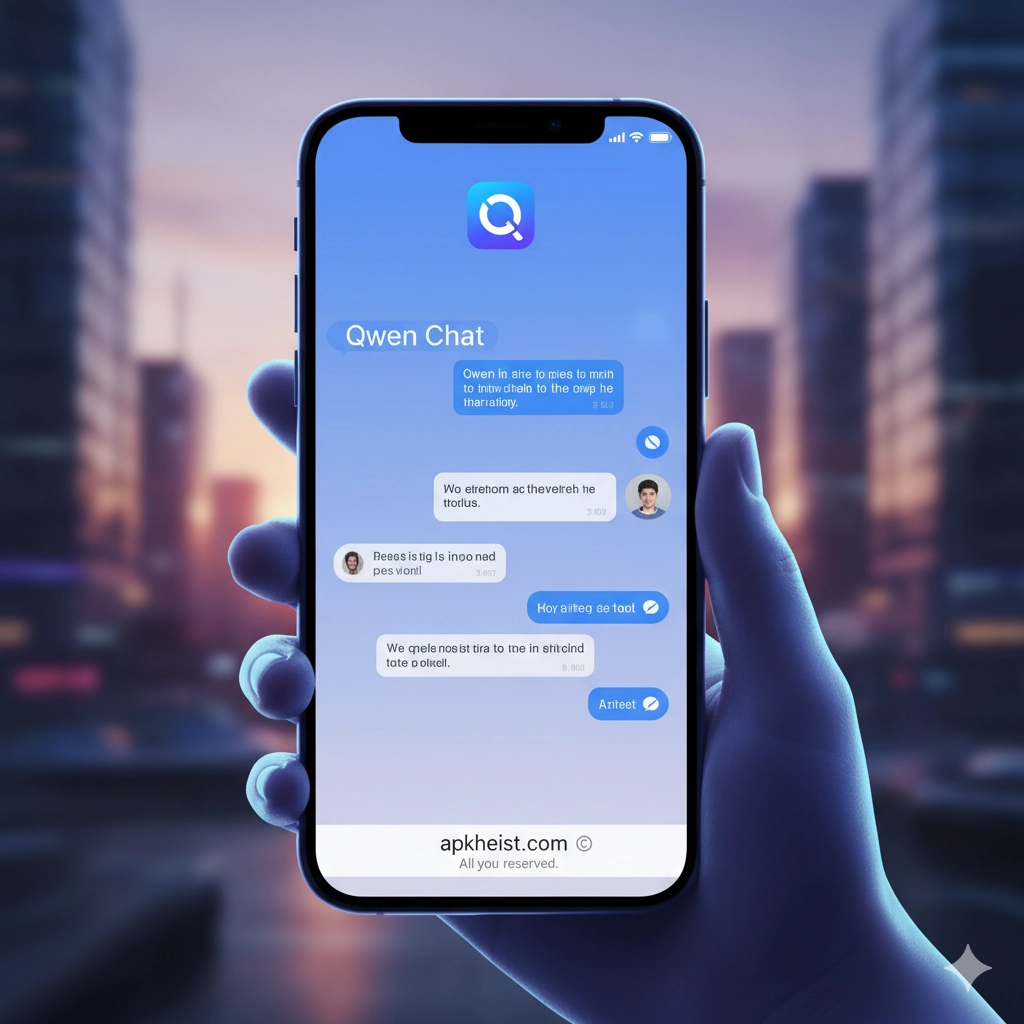
Long intro: Qwen Chat combines advanced language understanding with practical integrations to deliver an assistant suitable for everyday use and professional contexts alike. Built to handle multi-turn dialogues, contextual follow-ups, and task orchestration, the app offers features such as contextual memory, file and link handling, multi-modal inputs in certain builds, and customizable prompts. Whether you need brainstorming help, quick data lookups, writing assistance, or lightweight automation inside a messaging flow, Qwen Chat aims to reduce friction and surface high-quality responses while allowing users to retain control over the conversation. Below is a practical, structured guide that covers core features, real-world usage patterns, configuration tips, and frequently asked questions to help you get the most out of the app.
Contents
1. Overview — What Qwen Chat does and who it’s for.
2. Getting started — Installation, sign-in, and basic setup.
3. Core features — Conversation modes, context, and history.
4. Integrations & workflows — Connecting tools and automating tasks.
5. Privacy & data handling — What to expect and how to configure.
6. Advanced tips — Prompt design, templates and multi-turn strategies.
7. Troubleshooting & resources — Common issues and where to learn more.
1. Overview — What Qwen Chat does and who it’s for
Qwen Chat is a conversational assistant app that focuses on delivering helpful, contextual responses across a range of use cases. At its core, it provides a dialogue interface that can summarize content, draft text, generate ideas, and assist with research. The product is well suited for individual knowledge workers, small teams who need a lightweight assistant integrated into their messaging workflows, and content creators who want an on-demand editor and ideation partner. The app typically emphasizes low-latency responses, clear conversational state handling, and features that let users pin or export useful outputs.
Because Qwen Chat is conversational, the learning curve is minimal: users type what they need, and the assistant replies. For more structured workflows—such as multi-step data extraction, chained prompts, or integrating external documents—Qwen Chat provides features to upload files, reference past messages, and attach metadata to conversations so follow-up queries can use earlier context accurately. In practice, this means less repetition and smoother handoffs when you switch topics or return to a conversation after a pause.
2. Getting started — Installation, sign-in, and basic setup
Installing Qwen Chat is straightforward on supported platforms: locate the official distribution for your device (mobile app stores, desktop installers, or web client). After installation, sign in with the recommended account method—email, single sign-on, or provider-specific authentication—then complete the onboarding steps which usually include setting a language preference, choosing a default conversational tone, and enabling or disabling optional features such as cloud sync or telemetry.
During setup, new users should review the default privacy and history settings: decide whether to keep conversation history enabled for better contextual replies or to opt out for ephemeral usage. For power users, linking Qwen Chat to third-party productivity tools (calendar, notes, cloud storage) during setup unlocks richer, action-oriented responses, such as “Draft an email based on my calendar event” or “Summarize this shared document.” If you’re migrating from another assistant, use the import or copy features to bring in saved prompts and templates.
3. Core features — Conversation modes, context, and history
Qwen Chat commonly offers multiple conversation modes: short-answer mode for quick facts, deep-dive mode for long-form analysis, and creative mode for brainstorming and stylistic writing. Understanding mode switching is key: short-answer mode reduces verbosity and focuses on crisp replies, while deep-dive mode retains broader context and will ask clarifying follow-ups when necessary.
Context handling is one of the app’s strengths. Qwen Chat maintains a window of recent messages as context for follow-up questions, and some versions let you mark messages as “reference” to preserve them beyond that window. Conversations can be pinned or exported; saved conversations act as knowledge artifacts you can return to later. Good practice is to label important messages or add short notes so that when you search your history, you retrieve relevant threads quickly.
4. Integrations & workflows — Connecting tools and automating tasks
Integrations make Qwen Chat far more useful in practical workflows. Common integrations include cloud storage connectors, calendar access, messaging platform plugins, and document viewers. When you connect a cloud storage account, Qwen Chat can summarize documents, extract key points, and draft responses based on file contents. When linked to calendars or task managers, it can propose meeting agendas, synthesize action items, or create follow-up reminders.
Workflows are often implemented via chained prompts or templates. For example, a content workflow might: (1) upload a draft, (2) ask Qwen Chat for a headline and short meta description, (3) request SEO keyword suggestions, and (4) generate social snippets. Automating those steps with a saved template removes friction and yields consistent outputs. Consider creating templates for recurring tasks—weekly reports, meeting notes, outreach messages—and store them inside the app so the assistant can apply them quickly.
5. Privacy & data handling — What to expect and how to configure
Privacy and data handling vary by deployment. If you use a hosted or cloud-based edition, review the vendor’s privacy documentation to understand data retention, training-use policies, and whether conversations may be used to improve models. Many business-oriented deployments provide an option to disable data usage for model training, or to keep conversations within an enterprise data boundary.
Local or self-hosted deployments reduce third-party exposure but require diligence on updates and secure configuration. Regardless of the model, best practices include enabling end-to-end encryption where available for sensitive conversations, limiting access tokens and API keys to necessary scopes, and using role-based access control when multiple users share the same instance. If you handle regulated data, consult legal or compliance teams before uploading anything sensitive to cloud services.
6. Advanced tips — Prompt design, templates and multi-turn strategies
Effective prompt design increases the assistant’s usefulness. Start prompts with explicit intent (e.g., “Write a 150-word executive summary for…”), provide context in short bullet points, and constrain the desired format (headings, lists, tone). When you need iterative refinement, use numbered steps: ask for a draft, request specific improvements, and then ask for finalization. Templates are indispensable for repeatable outputs: store parameterized templates that accept variables like {project_name} or {deadline} and let Qwen Chat fill them dynamically.
Use multi-turn strategies for complex tasks: outline the task in an initial message, break it into subtasks, and let Qwen Chat produce incremental results. For collaborative settings, tag teammates and export intermediate artifacts for review. Finally, combine Qwen Chat with external tools—export the assistant’s output to your document editor or task manager to close the loop and ensure final deliverables are tracked and actionable.
7. Troubleshooting & resources — Common issues and where to learn more
Common issues include context loss in long conversations, unclear or inconsistent responses, and integration failures. For context loss, try pinning the most important messages or providing explicit context in each prompt. For inconsistent responses, switch to a “deep-dive” or “structured” mode if available and provide clearer instructions. Integration failures usually relate to permission scopes or expired tokens; re-authorize the connection and check the platform logs for error messages.
For learning resources, consult the official documentation, help center articles, and community forums. If the vendor maintains a changelog or release notes, watch it for feature updates, security patches, and best-practice guides. Community-contributed templates and example prompts can accelerate your adoption—look for shared prompt libraries and productivity bundles that match your use case.
Embedded references & related tools (selected): Firefox Nightly App: The Cutting-Edge — useful when you want experimental browser features to test web-based integrations; Is the Spacedesk App the Ultimate Multi — relevant if you use multi-display setups for writer workflows; Share Cool Emoji Arts Designs App — handy for quick social assets; Rhymit App — The Writer’s Fast Rhyming Companion — useful for creative copy; B.o.T Game — Tactical Odyssey in a Broken World — an example of a content-rich app where Qwen Chat can help produce game guides; Sugar Rush — A Quick Adventure Game — another content example for short-form marketing copy; Gun Strike Game — The Complete Player’s Guide — demonstrates long-form guide generation use cases.
FAQs
Q1: What platforms does Qwen Chat support?
A: Support typically includes a web client, iOS and Android mobile apps, and sometimes desktop clients for Windows and macOS. Feature sets can vary by platform—mobile builds emphasize convenience and notifications, while web/desktop builds expose advanced integrations and larger-context windows. Check the vendor’s download page for the most current platform availability.
Q2: Can Qwen Chat access my files to summarize them?
A: Yes—when you grant explicit permission. The assistant can summarize documents, extract bullet points, and produce outlines when you upload files or connect cloud storage. Confirm permissions before uploading sensitive files and use enterprise settings to limit who can access those summaries.
Q3: How does Qwen Chat handle conversation history?
A: By default, Qwen Chat stores a configurable window of recent messages to maintain context. Many versions include options to clear history, export conversations, or mark messages as permanent references. Business plans often offer controls for retention policies and archival rules.
Q4: Is Qwen Chat suitable for enterprise use?
A: Yes—when deployed with appropriate security controls. Enterprise editions commonly support single sign-on (SSO), role-based access, data residency options, and contract terms that restrict training data usage. Evaluate compliance features and encryption options before adopting it for regulated workflows.
Q5: How can I make Qwen Chat produce consistently formatted outputs?
A: Use templates and explicit format instructions in your prompts. For example, specify “Output as: 3 bullet points, each under 20 words, with a plain-text headline.” Save successful prompt structures as reusable templates so the assistant can apply the same pattern repeatedly.
Q6: What should I do if the assistant gives incorrect information?
A: Verify facts using trusted sources and treat outputs as drafts when accuracy matters. If the assistant repeatedly provides incorrect answers on the same topic, include explicit constraints and citations request in your prompt (e.g., “Cite sources or say ‘unknown’ if not verifiable”). Report systematic issues through the app’s feedback channels so developers can improve the model’s behavior.
Q7: How do I integrate Qwen Chat with other productivity tools?
A: Use built-in connectors or the app’s API to link calendars, cloud drives, and task managers. Authorize each integration with the minimum required permissions, then create templates or automation rules that call Qwen Chat for routine tasks (e.g., convert meeting notes to action items). For custom integrations, consult the developer docs for webhook and API examples.
Closing note: Qwen Chat is a flexible conversational assistant designed to accelerate everyday knowledge work. Begin with simple prompts, experiment with templates, and gradually connect the integrations that unlock the most value for your workflow. Keep privacy settings aligned with your needs, and use saved templates and pinned contexts to preserve continuity across sessions.